



Please ensure Javascript is enabled for purposes of website accessibility

Applications | Design & Manufacturing | Applied & Industrial Life Sciences

Engineering production-ready instruments for applied & industrial life sciences

Whether you’re deploying instruments in the field or scaling industrial workflows, Ascential bridges lab-proven concepts to real-world use. Our cross-functional team works together to design life science instruments and systems for manufacturability based on your distinct environmental variability, operator skill realities, and cost constraints. Our experience spans:

  • Veterinary and Animal Health Diagnostic Instruments
  • Food Safety and Pathogen Detection Systems
  • Environmental Monitoring and Water Quality Instruments
  • Agricultural and Crop Science Analytical Platforms
  • Industrial Bioprocess Monitoring and Analytics
  • Point-of-Use and Field-Deployable Testing Devices
  • High-Throughput Screening and Sample Processing Systems

Get Your 15-Minute Consultation

Solutions

Translate lab-proven concepts into field solutions

Ensure each system is engineered for precision, reliability, and ease of use in the field or production environments with limited control. Our experts design systems that integrate sample handling and preparation, optical and electrochemical detection, fluidic processing, thermal management, and instrument control software. We optimize all production workflows for non-laboratory operators and technicians, empowering scalable, real-world deployment.

Aplied Life Sciences Instrument Development

Strengthen full instrument design success by optimizing all systems for practical sample testing realities. Our experts engineer instrument control software for non-laboratory operators and environments.

System Design for Field Use

Design instrument architectures for field use with simplified systems and user interfaces that accommodate variable sample quality, operator training, and matrix complexity.

Manufacturing Process Development

Streamline design transfer and production with robust process validation support. We analyze tolerances and develop scalable workflows for regulated instrument production.

Prototype & Pilot Builds

Validate field performance and de-risk manufacturing decisions with early design verification. Our experts deliver rapid functional prototypes and pilot-scale builds for regulatory or certification testing.

Volume Manufacturing

Scale production by aligning process controls to the performance and reliability requirements of your applied or industrial deployment.

Sustaining Engineering & Cost Optimization

Yield improvement, resolve component obsolescence, and reduce costs for fielded instruments through VAVE programs.
Capabilities

Meet reliability & uptime requirements in production environments

Because uptime drives operational decisions and reliability is critical for life science research, we build instruments for your unique production environment. Our designs go beyond cost-cutting lab prototypes. We deliver scalable, high-performance systems optimized for real-world use and production timelines.

Detection & Analysis for Complex Sample Matrices

Get optical, electrochemical, and biosensor-based detection systems designed to perform reliably in complex sample matrices outside controlled laboratory spaces. Our experts ensure your signal processing and calibration architectures account for matrix interference, sample-to-sample variability, and real-world environmental conditions.

High-Throughput Sample Processing

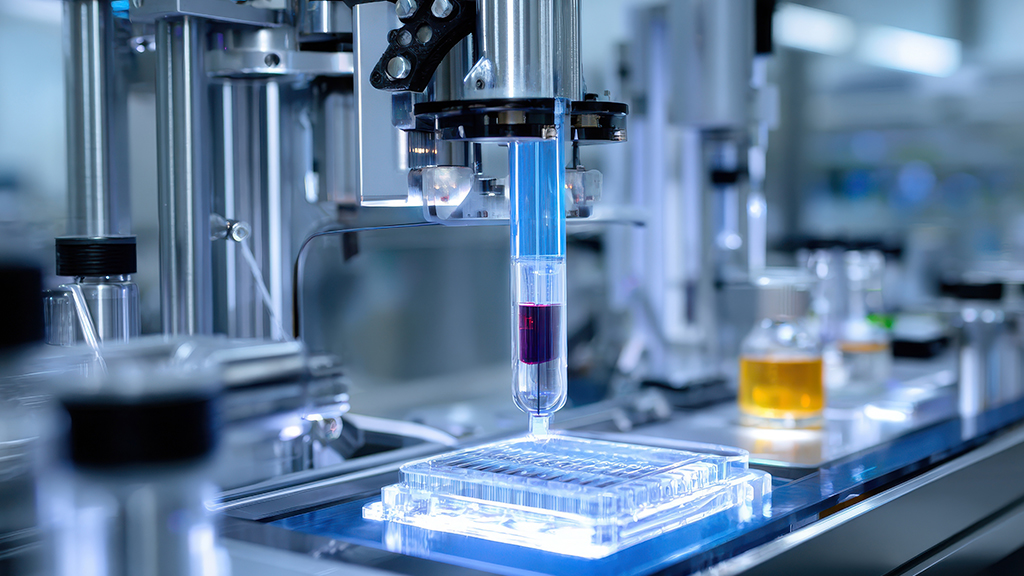
Ensure that your testing throughput matches the pace of your production or monitoring environment. We enable unattended or minimally attended operation by engineering fluidic and mechanical architectures that handle variable sample volumes, viscosities, and particulate loads without operator intervention.

Ruggedized & Field-Ready Instrument Architecture

Reduce the impact of operator variability by implementing user interfaces with error handling and guided workflows. We translate lab-bench design into field-ready instrument architecture: systems that provide wide ambient-temperature compensation, ingress protection, vibration and shock tolerance, and power management for variable or limited-power sources.

Manufacturing-Driven Development for Cost-Sensitive Markets

Validate your manufacturing processes and unit economics against your cost targets from early development. Our experts build a custom approach to component selection and assembly sequence design to help your team meet performance requirements, enable adoption, and position the unit for market success.

Case Study

Redefining food safety with automated pathogen detection

A company seeking to commercialize the first platform to combine cell transport technology with molecular techniques for food production applications faced process inefficiencies and contamination issues. Ascential delivered:

  • A single automated system that integrated complex technologies with precision manufacturing and full-scale engineering capabilities
  • A more efficient, scalable path to market

The platform is now setting a new standard in food safety with rapid, reliable, and repeatable pathogen detection.

Why Choose Ascential?

When you engage our team, you tap into 70+ years of experience delivering mission-critical solutions that bridge precision engineering, automation, and medical manufacturing knowledge from 7 highly specialized firms.
Artificial Intelligence Icon

Real-World Operating Environment Expertise

Enhance research capacity by designing instruments for the environment they’ll actually run in. Our engineers have built systems for clinical labs, manufacturing floors, and field settings. Whether your instrument user is a trained technician or an operator following on-screen prompts, we ensure analytical data is reliable and traceable.

Artificial Intelligence Icon

Integrated Engineering

Manage critical subsystem trade-offs strategically. Ascential brings every precision instrument discipline into one engineering organization. Our integrated approach allows us to deliver compact, holistic solutions that don’t sacrifice performance quality or consistency.

Artificial Intelligence Icon

Manufacturing for Cost-Sensitive, High-Volume Markets

A scalable manufacturing approach helps you accommodate future changes.

Frequently Asked Questions

Get answers to common questions about our expertise in applied and industrial life sciences.

This is a common starting point for our customers, but it’s rarely a cost-reduction exercise. Field deployment changes the architecture of your instrument. To translate bench performance to real-world utilization, we need to consider environmental compensation, sample handling for variable matrices, simplified user workflows, and serviceability in non-lab settings. Our experts evaluate what to carry forward or optimize from the lab design, and what to re-engineer for the target environment and cost structure, helping you streamline your decision-making process.
We’ve designed and manufactured instruments deployed across a range of environments — from controlled clinical labs to production and field settings. At Ascential, our multidisciplinary team approaches each program with the same engineering principles. First, we seek to understand the operating environment, the operator, and the sample, and then design the instrument architecture around those constraints rather than assuming lab conditions.
Our manufacturing spans the U.S. and Southeast Asia. Applied and industrial life science instruments often need cost structures that research instruments don’t. We structure programs to match: U.S. sites for development and pilot builds, and Southeast Asia for volume production, where unit economics are critical to market adoption.
We design sample handling, preparation, and detection systems for your specific sample matrix. Whether it’s an animal specimen, a food product, a water sample, or an agricultural extract, our experts work together to characterize how matrix variability affects your detection performance and design the fluidic handling and signal processing to accommodate it.
Program timelines depend on complexity. A field-deployable instrument adapted from an existing lab design typically runs 12-24 months from concept through design verification. A ground-up instrument with novel detection or sample-handling capabilities runs 18-30 months. Ruggedization and environmental testing add time that lab instruments don’t require.
Either. Ascential integrates client-preferred suppliers for detection components, sensors, and application-specific materials. Where you don’t have a preference, we use our qualified supply base. For cost-sensitive programs, component selection often involves evaluating multiple sources to find the right performance-to-cost balance.

Related Resources