

Trade shows are less about spectacle and more about signal. When many manufacturers are facing the same operational challenges, it becomes easier to see where priorities are shifting across the industry.
At MD&M West 2026, several themes surfaced repeatedly from formal sessions to customer conversations. Together, they reflect a medtech environment that is becoming more measured, more integrated, and more focused on proof.
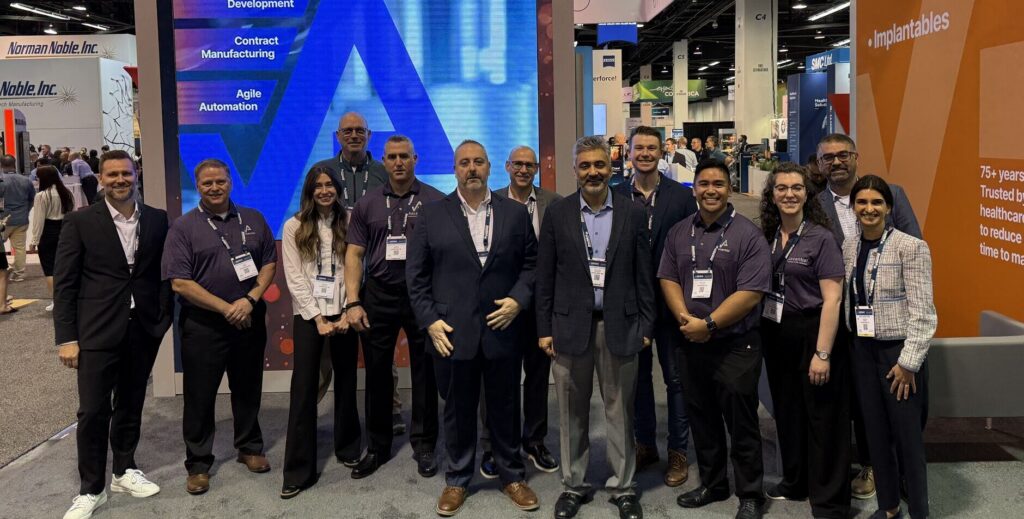
Here are the five developments that stood out.
1. Sustainability is becoming operational
Sustainability discussions focused on practical metrics: energy intensity, material usage, scrap, and how environmental performance is increasingly influencing supplier qualification and production strategy.
The emphasis was not aspirational. It was procedural.
For manufacturers, that signals a move toward sustainability practices that can be audited, compared, and embedded into routine decision-making.
2. AI conversations are grounded in results
Artificial intelligence and smart factory tools were prominent across the show floor and within educational sessions.
What felt different from previous years was the framing. The conversation centered on tangible outcomes: yield improvement, downtime reduction, inspection performance, and integration into regulated environments.
The excitement about AI remains, but the expectation of demonstrable value is now explicit.
3. Sterilization is influencing earlier choices
Sterilization considerations are moving upstream into development conversations.
Rather than waiting for late-stage compatibility testing, teams are evaluating how materials, geometries, and packaging will behave under sterilization conditions earlier in the lifecycle.
This shift reflects a desire to avoid costly redesigns and validation setbacks.
4. Evidence is shaping design behavior
Another idea echoed across coverage of the event was the growing importance of defensibility.
Manufacturers are scrutinizing whether decisions regarding materials, processes, and technologies will hold up under regulatory review and during scale.
The expectation is not simply that something works, but that it can be demonstrated, documented, and repeated.
5. Automation remains central, with an eye toward longevity
Automation, robotics, and inspection technologies continued to dominate the expo floor.
However, attention is increasingly directed toward systems that can persist beyond early volumes: modularity, upgrade paths, and compatibility with evolving requirements.
Scalability is part of the buying conversation from the outset.
Key Takeaways
None of these priorities appeared in isolation.
- Sustainability affects sourcing.
- AI affects validation strategy.
- Sterilization influences design architecture.
- Automation choices influence long-term flexibility.
What MD&M West highlighted is how interconnected the commercialization journey has become. As development cycles compress, the cost of discovering downstream issues late in the process increases.
Organizations that incorporate considerations of evidence, repeatability, and operational performance earlier will likely find fewer surprises later.
MD&M West remains a valuable temperature check for the industry. This year, we observed an industry moving toward greater rigor, greater transparency, and a deeper appreciation for how early decisions shape long-term outcomes.