




Please ensure Javascript is enabled for purposes of website accessibility

Applications | Design & Manufacturing | Protein Analysis

Manufacture, automate, & scale your protein analysis program

Advance your protein analysis instrument with an integrated design, development, and production partner. Ascential has direct experience manufacturing and automating applications such as

  • Immunoassay Analyzers
  • Multiplexed Protein Detection Platforms
  • Label-Free Binding and Interaction Analysis Systems
  • Protein Characterization and Quantification Instruments
  • Flow Cytometry and Cell Sorting Systems
  • Mass Spectrometry Sample Preparation
  • Western Blot and Gel Electrophoresis

Get Your 15-Minute Consultation

Solutions

End-to-end manufacturing solutions for protein analysis applications

Turn complex protein assays into reliable, manufacturable systems ready for commercialization. Our precision manufacturing expertise and engineering capacity help you preserve assay sensitivity, ensure regulatory readiness, and achieve consistent performance at every product stage.

Protein Analysis Platform Development

Strengthen program reliability with protocol-aligned instrument design from concept through production. We leverage precision liquid handling, optical and electrochemical detection systems, temperature-controlled incubation, surface chemistry integration, and application software for assay execution and data analysis.

Assay Consumable & Microplate Development

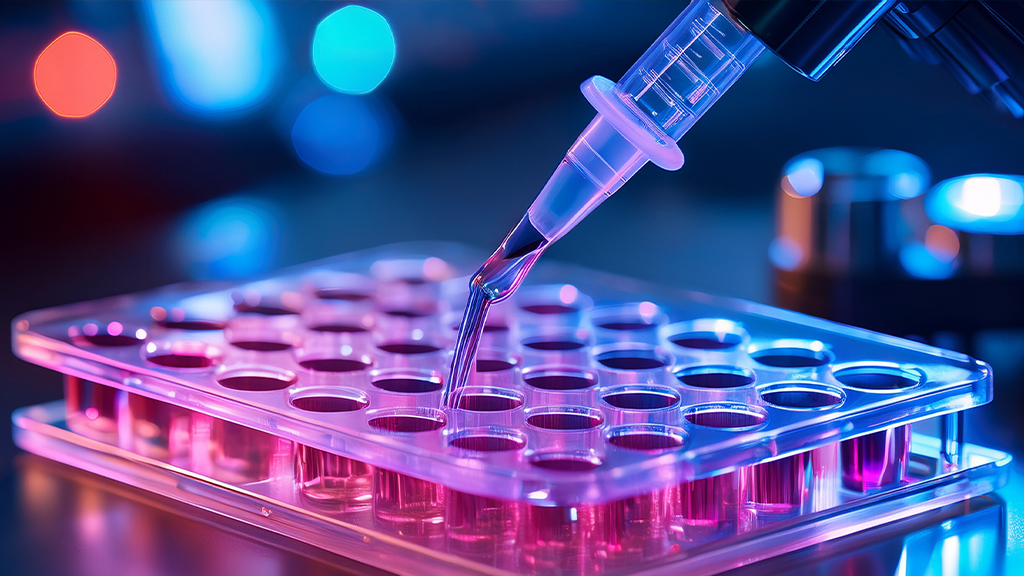
Ensure microplates, flow cells, cartridges, and disposable fluidic paths are engineered for chemistry compatibility and optical accessibility. We build in consumable geometry, material selection, and assay-relevant surface properties, then validate design performance via injection molding.

Tolerance Analysis & Process Development

Achieve specific precision requirements: fluidic channel dimensional control, surface treatment uniformity, optical coating consistency, and mechanical alignment repeatability with robust, validated process development. We also handle transfer documentation.

Prototype & Application Development Builds

Get assay validation results that transfer to the manufacturing process with functional prototypes and pilot-scale builds for development, design verification, and multi-site application testing.

Volume Manufacturing

Work with us to design process controls engineered for production scale: incoming inspection for surface-critical materials, verification of coating uniformity, and final test protocols that include assay-relevant performance checks.

Sustaining Engineering & Cost Optimization

Yield improvement, component obsolescence resolution, and cost-per-read reduction through VAVE programs on fielded protein analysis platforms.

Capabilities

Align production decisions with chemistry intent

Our cross-functional team builds high-performing instrument platforms to support your immunoassay automation and protein characterization needs. We can improve:

  • Chemiluminescence and fluorescence detection
  • Background suppression
  • Dynamic range optimization
  • Wash efficiency and incubation uniformity
  • Multiplexed assay support

Fluid Handling Optimized for Protein Sensitivity

Our engineers balance fluid handling paths with material selection to minimize non-specific protein adsorption, control flow rates to prevent shear-induced denaturation, and tune wash protocols to reduce background without disrupting binding. Sub-microliter dispensing precision ensures that assay sensitivity and CVs on production instruments match bench-scale performance.

Surface-Engineered Consumable Development

We develop surface treatments — including coatings, plasma activation, passivation, and blocking — concurrent with your chemistry, so surface properties are a controlled parameter, not a source of drift. By characterizing surface energy, binding capacity, and non-specific adsorption across production lots, we ensure lot-to-lot variability stays within assay tolerances.

Multi-Modal Detection System Design

Build fluorescence, absorbance, luminescence, electrochemiluminescence, electrochemical, and label-free detection subsystems with optimized optical geometry, detector selection, and signal processing. Ascential helps verify that detection limits, dynamic range, and read speeds meet your assay specifications across the entire consumable format.

Thermal Management for Protein Assay Workflows

Maintain incubation stability, precisely control enzymatic reactions, and compensate for ambient temperature variation. Our thermal management approach ensures your assay results remain consistent and sensitive protein measurements are protected under real-world conditions.

Case Study

Scaling proteomics with high-throughput automation

A biotech startup developing a next-generation multiplex proteomics platform needed to integrate complex optics, fluidics, and motion systems into a small, user-friendly device and to prove feasibility to investors — fast. Ascential engineered the platform, enabling scalable, high-throughput multiplex proteomic analysis through a streamlined sample-to-data workflow that optimized cost for higher volume.

With an alpha prototype delivered in just 12 weeks, the startup could immediately begin investor demos to secure additional funding. Today, the platform is positioned for scalable production that will meet future market demands.

Why Choose Ascential?

When you engage our team, you tap into 70+ years of experience delivering mission-critical solutions that bridge precision engineering, automation, and medical manufacturing knowledge from 7 highly specialized firms.

Protein-Informed Engineering

Our designs and strategic recommendations are grounded in real protein biological challenges. We select wetted materials for minimal non-specific binding, constrain flow rates to analyte stability limits, and specify incubation uniformity relative to binding kinetics.

Integrated Engineering

Quickly manage sensitive interactions between fluid handling, surface properties, thermal control, and detection with an integrated engineering, manufacturing, software, and automation team. One-source oversight simplifies design changes.

Consumable Production Automation

Automate your consumable production with confidence. Assembly, bonding, surface treatment application, inspection, and tests are all conducted on systems we build ourselves to understand what manufacturing processes can reliably achieve, informing better consumable design.

Manufacturing for Protein-Sensitive Tolerances

Address the gap between prototype and production performance. We design with production process capability data and protein assay manufacturing realities in mind, not prototype assumptions.

Frequently Asked Questions

Get answers to common questions about our protein analysis capabilities.

We work under NDA. Your science team owns the assay; we engineer the platform to deliver it. We run our fluidic and surface material evaluations against your specific analyte and sample matrix so that design decisions are validated for your chemistry, not generic specifications.

This is where we spend a disproportionate amount of engineering effort, as these areas frequently determine field performance. We evaluate wetted path materials for non-specific binding against your target proteins. By characterizing shear profiles in aspiration and dispense, we avoid denaturation. And instead of specifying thermal uniformity against your assay’s thermal engineering specs alone, we look to its kinetic sensitivity for stronger design.

Our sites span the U.S. and Southeast Asia. We use U.S. sites for early development and pilot builds where engineering proximity matters, and Southeast Asia for volume production of instruments and consumables where cost structure is critical to your unit economics.

Yes. We build automated consumable production lines with integrated surface treatment and in-line inspection. We establish surface property specifications (contact angle, binding capacity, non-specific adsorption) during development and control them as manufacturing parameters with incoming material inspection and in-process verification.

A protein analysis instrument from concept through design verification typically runs 18-30 months. Platforms with novel detection modalities or complex multi-step assay workflows tend toward the longer end. Automated liquid handling systems with established detection methods are faster.

Either. We frequently integrate client-specified suppliers for specialty surface treatments, coatings, assay-specific reagent packaging, and detection components. Where you don’t have a preference, we use our qualified supply base. For surface-critical consumable materials, we recommend qualifying alternatives early because sole-source risk on a coating or membrane can stall your production.

Related Resources